
I’d never call myself an art connoisseur, but I am an art lover. I appreciate the colors and textures and perspectives of art, but I know little about styles and periods. I’ve been to the Louvre and Museé d’Orsay in Paris, the Picasso museum in Barcelona, and the Van Gogh Museum in Amsterdam. I’ve been swept into the paintings of Klimt, mesmerized by the sparkling glass of Chihuly, and held by the physical power of sculptures by Michaelangelo. But I’ve never been more captivated than when I visited the local art installation of Walter Zimmerman here in Rochester, NY.
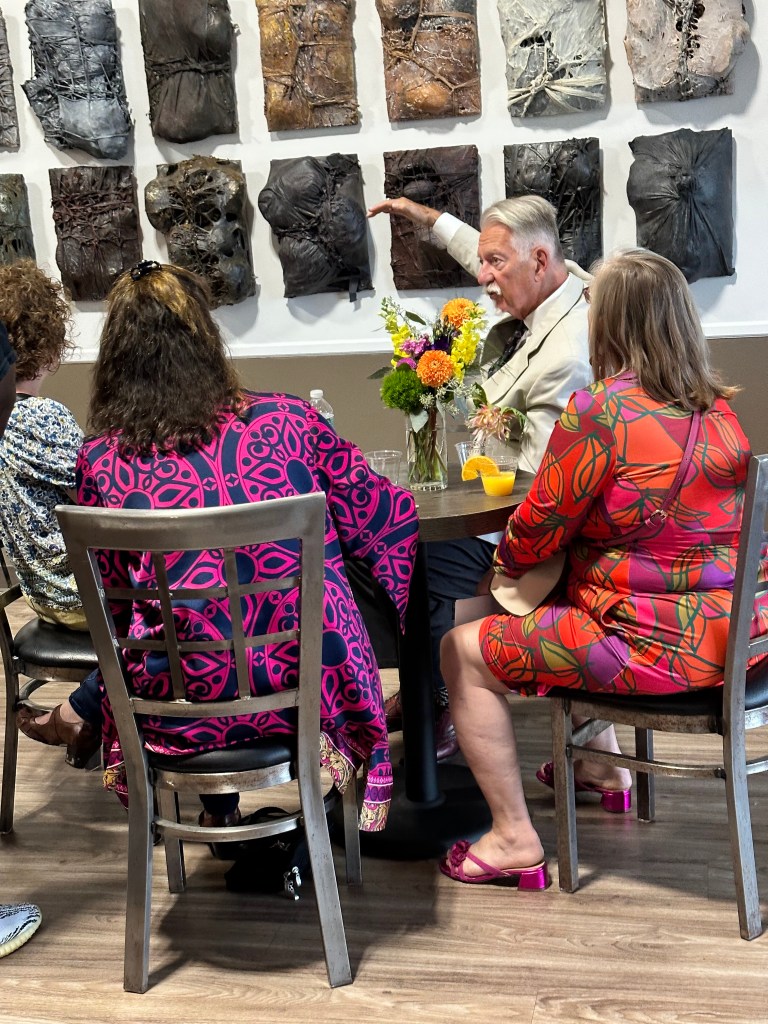
I met Walter at the retirement party of a friend recently. He was both a delightful raconteur and a rapt audience as we shared our experiences traveling Europe and navigating society–both here and abroad. With hubris and humor, Walter revealed pieces of his life with his husband and his artistic journey. I left the encounter wanting more time and conversation with him, so I was thrilled when our mutual friend invited me to the opening of Walter’s art exhibit.
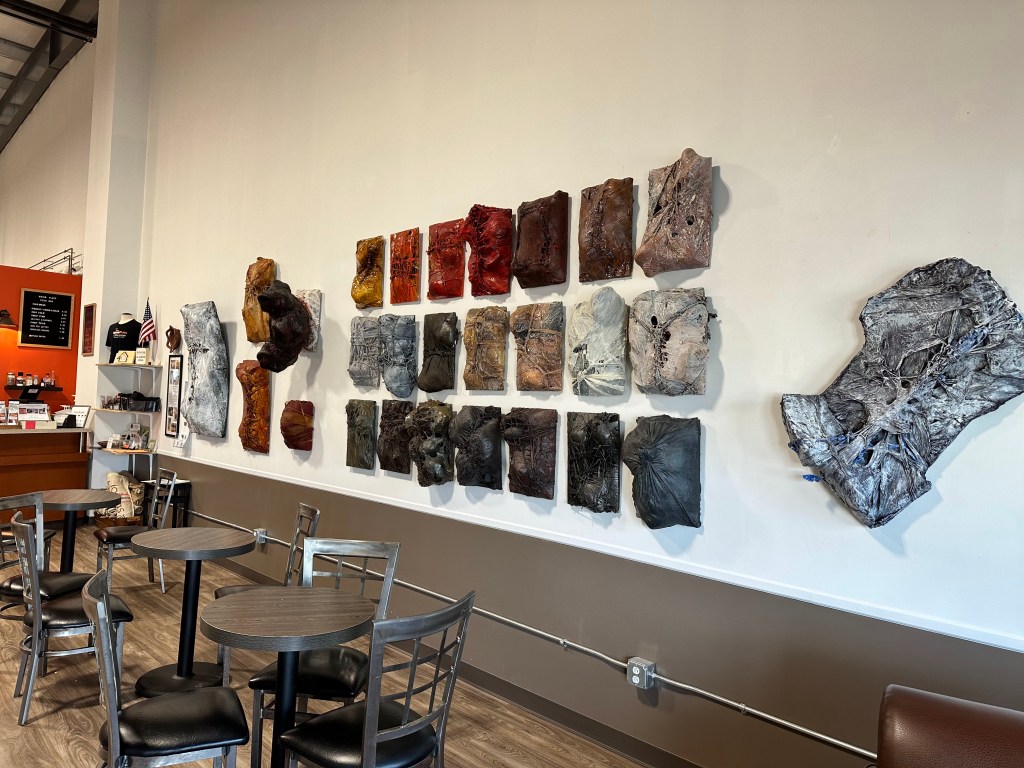
Walter’s art is made primarily from discarded or found objects. This particular compilation portrayed the period his parents placed him in an orphanage as a child. The pieces, displayed on what I perceived as the progression of those days in shunning, do not draw the eye because of their beauty, but because of the emotions they elicit. Not only are the portrayals masterful, causing me to feel shock and tension and pain, but knowing they are created from items no one desired, akin to how Walter likely felt in that orphanage, further magnified those reactions.
The mixed media pieces, with titles describing episodes of Walter’s young life, progress in color from white through a raw orange and reddish color, to bronze, settling on the hardness of silver, then flesh tone. I thought of my own seasons of suffering as I gazed at what I interpreted as exposed sinew through ripped tissue. It reminded me of the fresh pain and inflammation in a wound, mending (on the surface) to a scaly reddish scab, to a rigid scar, then to fresh skin. That progression of healing a torment applies to the inner heart as well as the outer skin.

In a conversation with my hairstylist (who is also educated as an artist, specializing in ceramics), I told Jordan I felt compelled to write about Zimmerman’s art, but I feared my feelings about the pieces were not what the artist intended. Jordan’s answer was simple:
The artist cannot, nor does he wish, to dictate what others see when they view his creations. His hope is that you feel SOMEthing.
And feel something I did. I FELT pain, I CRIED tears, my heart ACHED.
So I’ll be fidgety as the artist reads my words about his composition. Then I’ll make my way back to Union Place Coffee Roasters to experience Walter Zimmerman’s compilation again. I’ll have a cup of coffee and linger, hoping to chat more with Walter about his art and his life. After all, even though I’m not an art connoisseur, I am an art lover.
“Your story is always more important than mine…If my work generates personally intimate meaning, then it’s doing its work.”
Walter Zimmerman, interview, Transparent Conversations, Museum of Glass, 2021

P.S. We did meet for coffee, and will again!
Walter Zimmerman’s installation continues to be on display at Union Place Coffee Roasters, 900 Jefferson Road, Rochester, NY until the end of January 2024.























 European Trophy Wife no More